
Posted by on
24/06/2026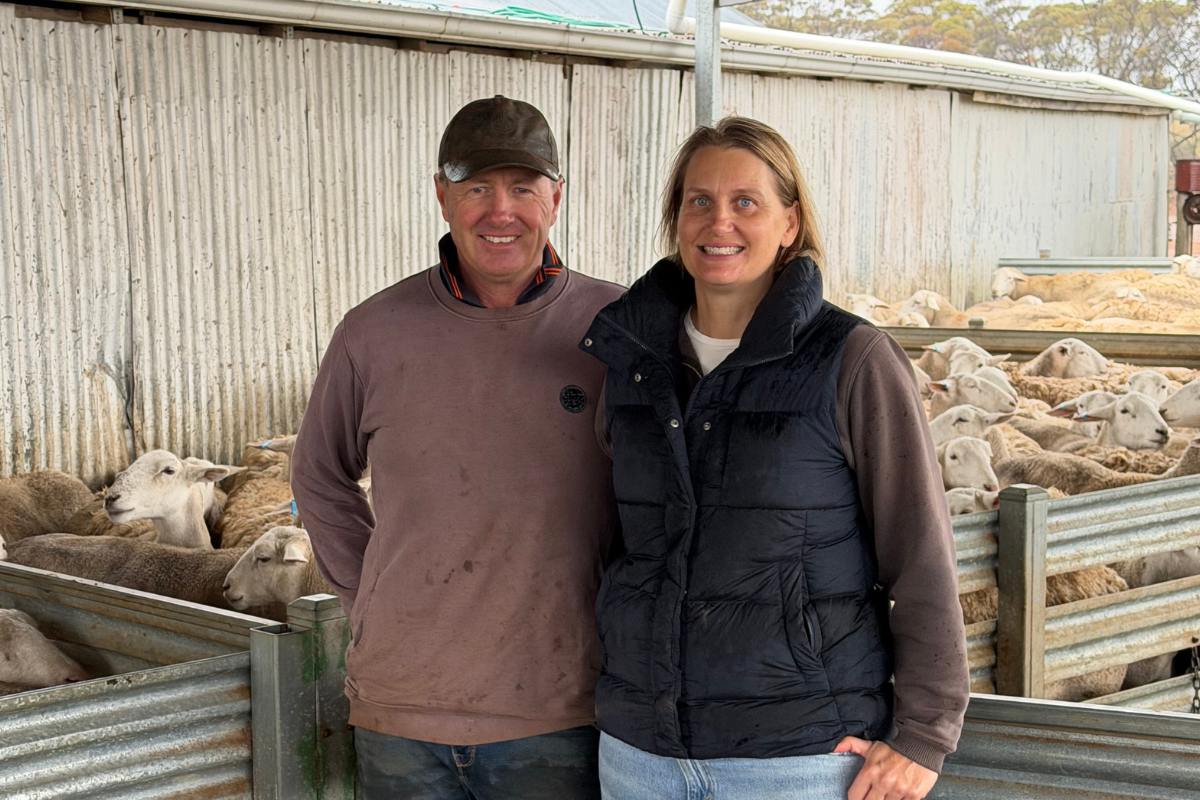
Western Australia's Braden and Kate Johnston have adapted their operation for profitability and lifestyle benefits.
When the numbers weren’t stacking up across Braden and Kate Johnston’s Western Australian sheep enterprise, they boldly pivoted – replacing their entire SAMM and Dohne flock with Ultra Whites.
It was five years ago now that the couple, who also run a broadacre cropping operation on their Nyabing property “Fourwinds”, shifted direction, and next month this enterprising duo will share their learnings at Australia’s flagship sheep, lamb and wool conference, LambEx26.
“Previously we ran 4,500 Prime SAMM and Dohne blood breeding ewes, of which 2,000 ewes were joined to Prime SAMM and Dohne rams and the remaining ewes were mated to White Suffolk sires,” Braden explains.
“We did the maths and by the time we paid labour costs, we found we just weren’t making money from wool.”
Traditionally a sheep property, Braden and Kate returned home to the fourth generation farm in the 90s, and while 80 percent is now cropped, they still regard sheep as a valuable addition to their business.
“We grow vetch as the legume inside our system, and as a pasture for our sheep we believe we can make more money having a sheep on our vetch versus other types of legumes. We can play the season a bit, in regards to if its grazed or turned into hay,” Braden explains.
After careful consideration, the couple chose to develop an Ultra White commercial flock, and today run 4,000 ewes, lambing every eight months, with sheep meat their primary focus.
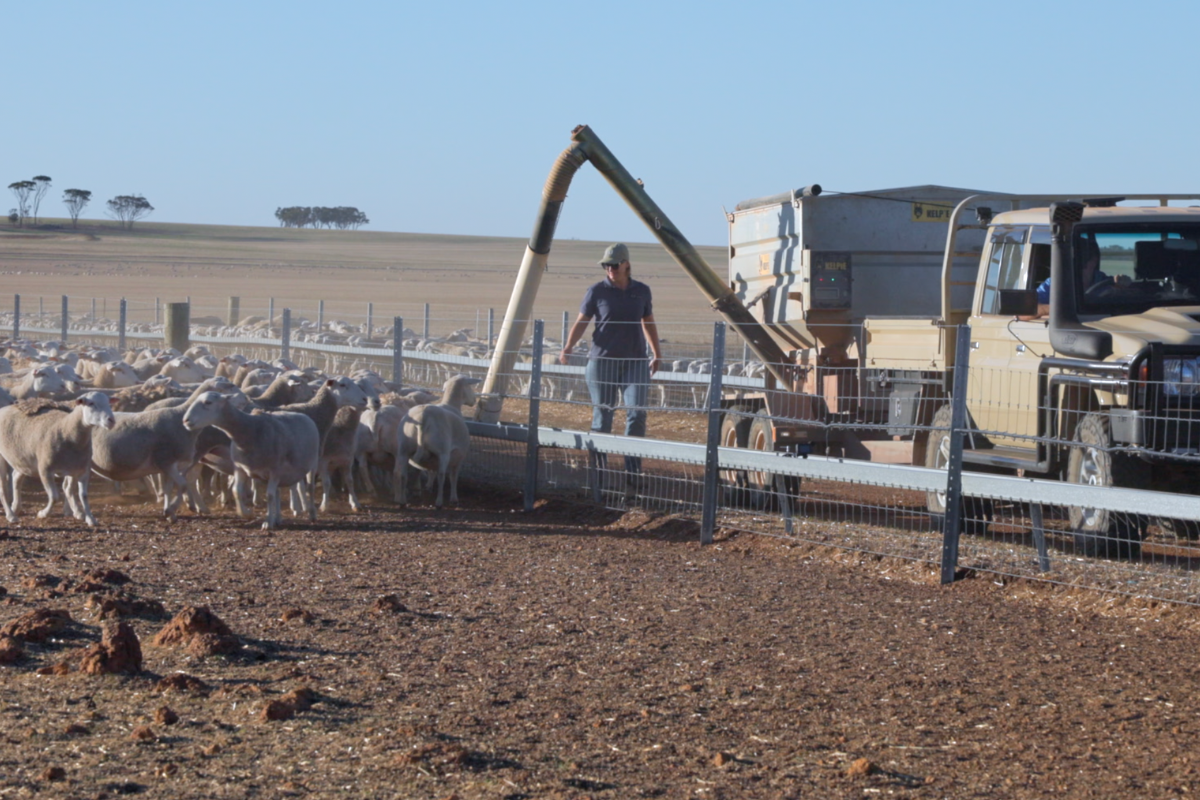
A highly-considered management plan including confinement feeding, continual genetic improvement, and pasture management underpin a strong business.
Their strategic use of vetch, couple with well-managed confinement systems, and consistent genetic selection, is all aimed at improving productivity while carefully managing input costs across the business.
However, Braden and Kate admit there have been challenges.
“It’s probably taken us longer than we expected to get our Ultra White enterprise to where we want it,” Kate explains. “We had to buy ewes from all over the State when we swapped our flock over, so it’s taken us a while to get consistency in our breeding objectives.”
Yet, any concerns they had around keeping the Ultra Whites contained proved unfounded, with Braden describing the breed as excellent to manage, “they haven’t given us any problems”.
A natural wool shedding breed, Braden says without the need for shearing, lice treatments, or crutching, the Ultra White’s input costs are minimal
“There’s a lot less management involved, however we’re now lambing every eight months as opposed to annually, so they’re handled more often at mating time, but we’ve really been able to negate those large, long workloads over shearing and crutching, and the surprise labour components such as jetting during a blowfly wave.”
“We’re now in a routine, yet it’s a positive routine,” Kate smiles.
With Ultra White only developed in 2005, Braden and Kate are excited by the modern breed’s potential, and are part of a four year project with the University of Adelaide researching and developing breeding objectives and identifying traits in self-shedding sheep.
“Our primary objectives are fertility, growth, and eating quality, and while it’s still early days, I think it’s going to be a really interesting, and exciting decade ahead,” Braden says.
And while it’s taken longer than expected to get to a point of profitability after having to buy in so many sheep, the couple remain buoyed by the Ultra White’s business potential.
“We’ve increased our DSE, our feed conversion rates are better, and I think there’s real potential to gain better profits per lamb carcase thanks to our carefully considered vetch and confinement system.”
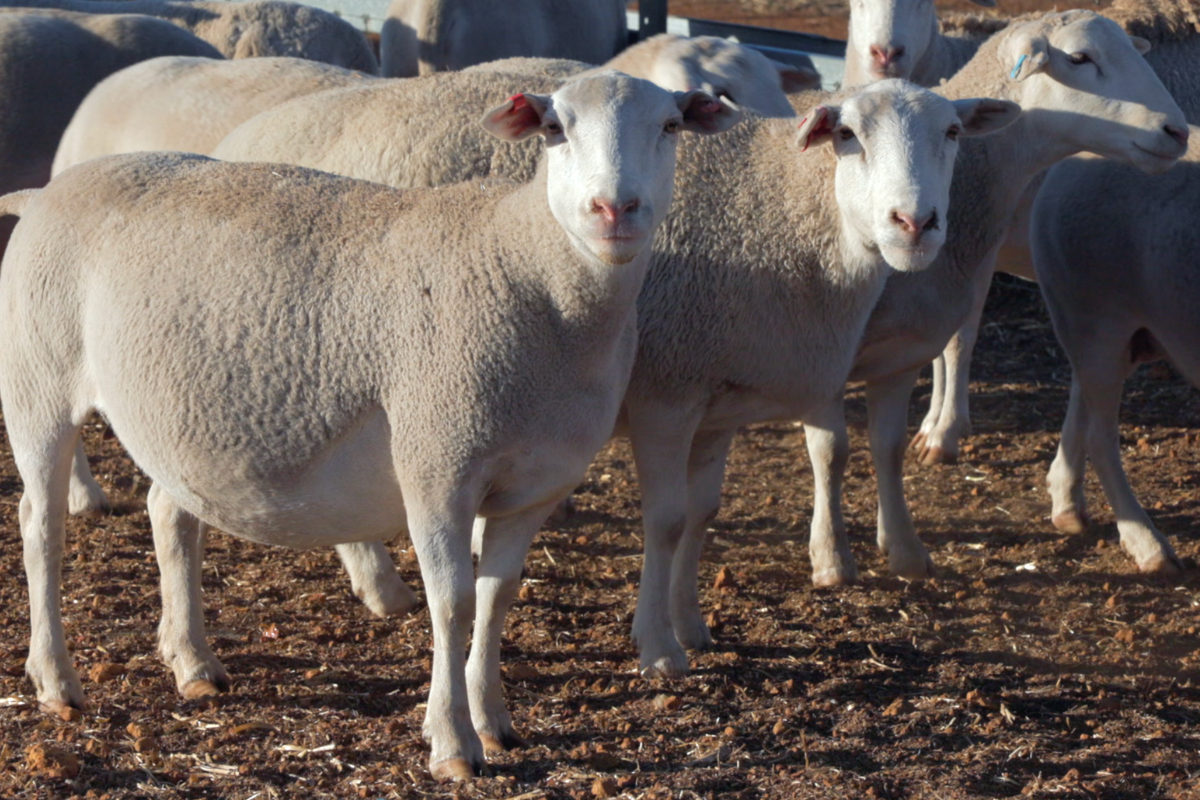
Braden and Kate Johnstone have found the Ultra White breed easy to handle, with lower input costs driving profitability.
Come July 7 to 9, Braden and Kate will attend their first LambEx event, this year being held in Adelaide.
They’re looking forward to getting off farm for a week and networking across the industry.
“You just never know who you’ll meet at these events, and if you can pick up just one little thing to bring back to your own business, then why not?” Braden says.
The couple will form part of a grower panel at the event, chosen after entering the LambEx26 Carcase Showcase.
“It was the first time we’ve entered a carcase competition, and did so out of interest to gain some data on our eating quality,” Braden explains.
“It’s a new flock and without any data we have no indication on where we sit, and while we performed well, there’s always room for improvement – which is why these competitions are so valuable for benchmarking.”
With their panel session consisting entirely of producers, all outlining their different systems and learnings, Braden acknowledges that they don’t have all the answers, nor are they doing everything right.
He does, however, acknowledged the impact of hearing about how other businesses run.
“We’re always happy to share our knowledge and what we’re doing, and if that helps someone then even better.”
Growing for the future with Rabobank
As clients of Claire Gray out of Rabobank’s Lake Grace team, the Johnstons are grateful to have a manager who understands their business.
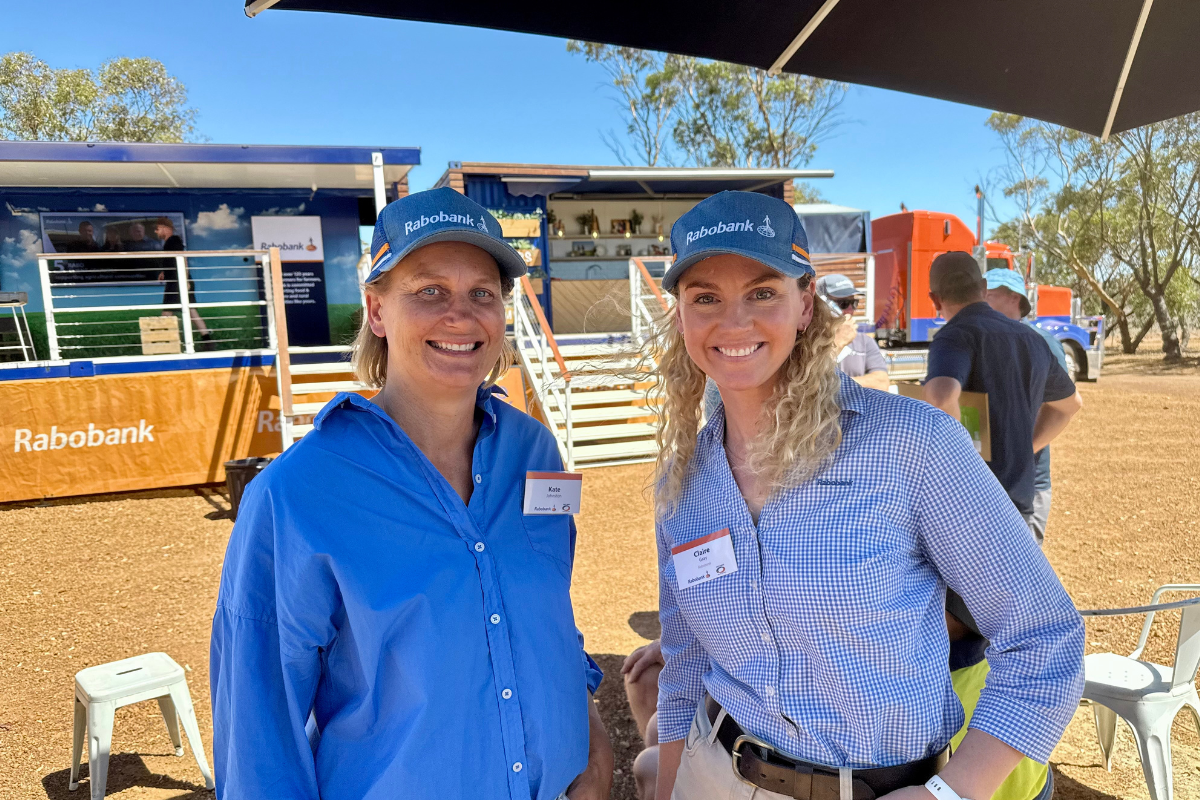
Kate with Rabobank's Claire Gray at a recent RaboTruck event.
“Claire knows exactly where we want to go with our business, and is very supportive of our goals,” Kate says.
With two teenage sons, Cambell and Spencer, their interest in coming home to the farm has reinforced Braden and Kate’s resolve to strengthen their farm business.
“If our sons truly do want to come home to the farm then we need to be in a position to support that, and whether that’s growing the business through expansion, or improving efficiencies.“
“Our transition into Ultra Whites is one of the steps towards building business strength and resilience, and it’s certainly exciting.”