
Posted by on
06/07/2026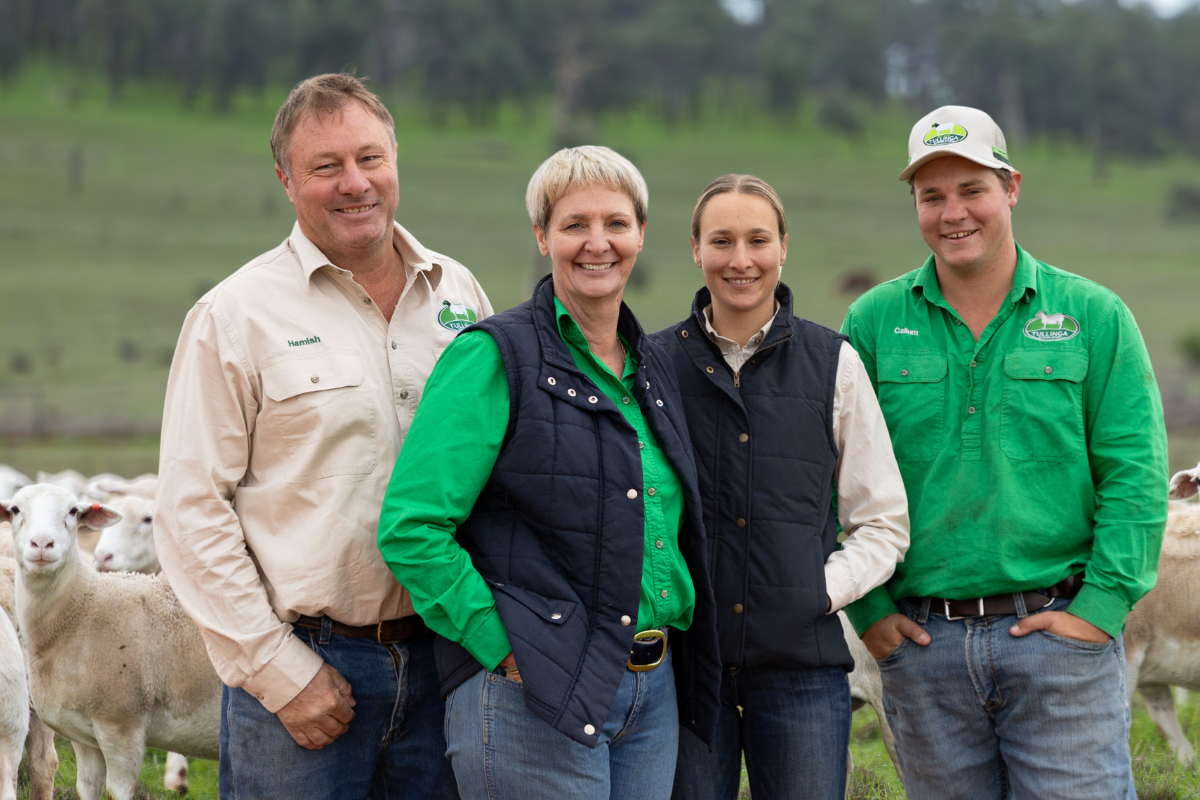
Hamish, Penny, Alex and Callumn Wald of Tullinga Dorper Stud.
While Australian agriculture rode the sheep’s back, modern new breeds were quietly progressing in the background – and today they’re taking centre stage in an exciting sheep industry renaissance.
For NSW’s Wald family, the transition into Dorpers has been a well-timed business boon, with Hamish Wald confident the Australian industry is today perfectly aligned to take advantage of modern sheep meat breeds.
Hamish, wife Penny and children Alex, 25, and Callum, 23, run a commercial and stud Dorper operation across their Condobolin properties, with figures that continue to upstage their beef and cropping enterprises.
“The beauty of Dorpers is that you can control your cost base, it’s a scalable business without having to find extra skilled labour, and Dorpers are productive on grass – there are few enterprises in ag like this where you can actually have low risk and high reward,” Hamish explains.
“Our climate suits sheep production, protein demand continues to take off, lamb has a highly regarded eating quality, and Australia has built a sophisticated and efficient meat processing sector – shedders may be new, but they’re riding off the back of an established industry, and we feel lucky to have entered during this exciting industry transition.”
An enticing future for young producers
Beyond the business opportunity, Hamish and Penny are thrilled that the modern shedding sheep breeds are enticing young people back to the central west region, their own children included.
“The kids see a future in ag, and there are more and more young ones moving back to town – they’re excited by the Dorpers’ business potential, as are we,” Penny smiles.
“The ‘paddock to plate’ momentum is one we can all be proud of, the quality and breeding being presented on a plate is providing our next-gen with passion and purpose.”
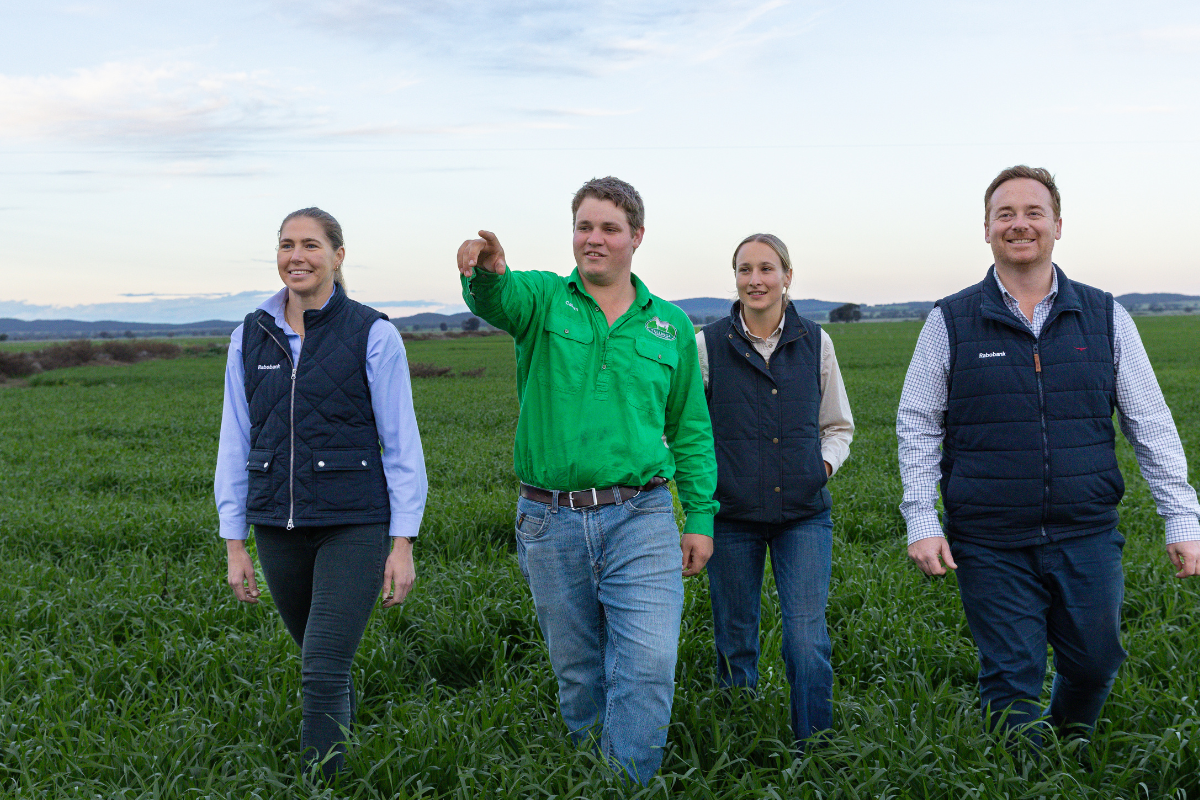
Callum and Emma Wald with Rabobank managers, Emma Fessey and Alex Hunt out of the Orange branch.
Describing themselves as ‘traditionalists, yet open to change’, Hamish and Penny loved wool, and their Merinos, yet in the end prices and the changing labour market forced their hand.
“We had our teeth gritted for 30 years, that was the sort of ride we were on – we’d been leasing and buying land and living with a lot of risk, and when it came to controlling risk and managing costs, the modern sheep breeds ticked all the boxes,” Hamish says.
With active buyers and robust demand, reflected by a growing Dorper presence at local saleyards, the strong industry attracted them to the breed.
“Dorpers were first bred in South Africa 80 years ago, and developed in Australia over the past 30 years, the knowledge has been built and there’s a generous support network – crucial when starting out in any industry.”
And they didn’t have to look too far when it came to establishing their flock – purchasing their neighbours, Anne Coffey and Robin Sanderson’s, Tullinga Dorper Stud in 2021.
“We went shopping for a breed, and came home with a stud,” Hamish laughs.
Patience, hard work, and Rabobank support
Whilst they’ve developed a prosperous farm business now supporting two generations, Hamish and Penny are frank reflecting on times that were not always so positive.
“No person is an island, and it’s taken plenty of good support to be in the position we are today”, Hamish reflects.
Yet it seems the couple’s agility and capacity to sacrifice underpinned their path to success.
As a young couple, Hamish and Penny were fortunate to lease 1,600 hectares off Hamish’s father, before remortgaging their house in town to lease another 3,237 hectares nearby.
They eventually rented their house in town and lived in a small farm cottage to earn extra income, and when another nearby property came up for sale, they sold their home as a deposit, and Rabobank supported them into their first farm.
“Times were really rocky after that,” Hamish admits. “From 2005 to 2009 we hit drought, and purely due to the fact that we were young and had few living costs, we could keep expenditure low and work extra hours, and keep our head above water.”
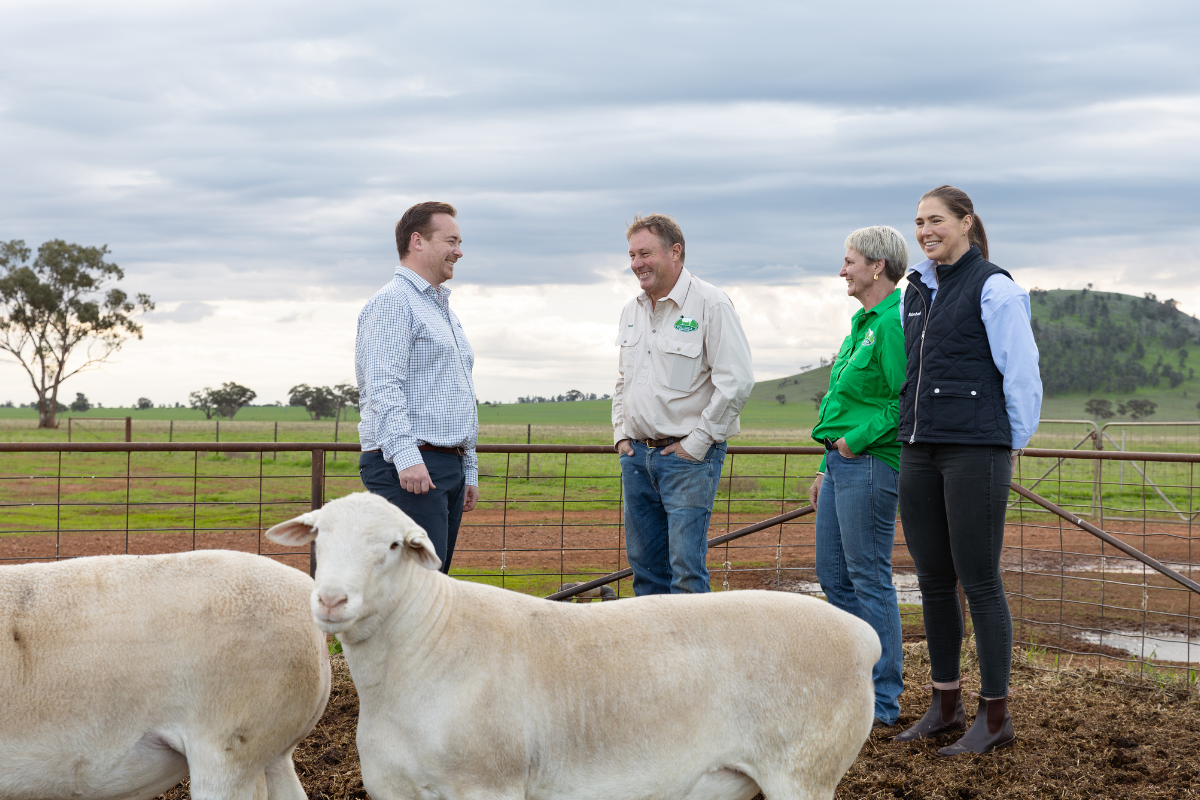
Hamish and Penny Wald with Rabobank's Alex Hunt and Emma Fessey.
From 2010 to 2016 thankfully the pressure eased, with seasons and commodity prices aligned – and Hamish smiles it was great opportunity to make money.
It also demonstrated Rabobank’s commitment through challenging times.
“Rabobank stuck with us when many other banks wouldn’t, the staff were amazing, they met with us, made a plan and never misled us, but they understood the business and what we were trying to achieve.”
“Our whole vision would have fallen over with another bank during those tough years, but Rabobank saw beyond the numbers – they talked to me, they talked to Penny, and they took the time and effort to know our business.”
Penny believes that the beauty of having two Rabobank team members across their business was also hugely beneficial.
“Its never just our manager who visits us on farm, there are always two people, so there are always at least two people in the bank who know our business – someone always knows our story and we’re never having to re-explain ourselves.”
In regards to their Rabobank manager, Alex Hunt out of the Forbes and Orange branch, Hamish and Penny were impressed by his collaborative approach to supporting their business.
“When we speak, he listens, when I give him my mud-map business plan, he gets it – we never feel judged or pushed, it’s not a master/servant relationship, it’s a partnership, which is no different to how we feel when supporting our sheep clients,” Hamish explains.
“Alex also has a lovely manner about him, which I think is reflective across Rabobank, everyone is genuine rather thank forced and it’s a very unique culture.”
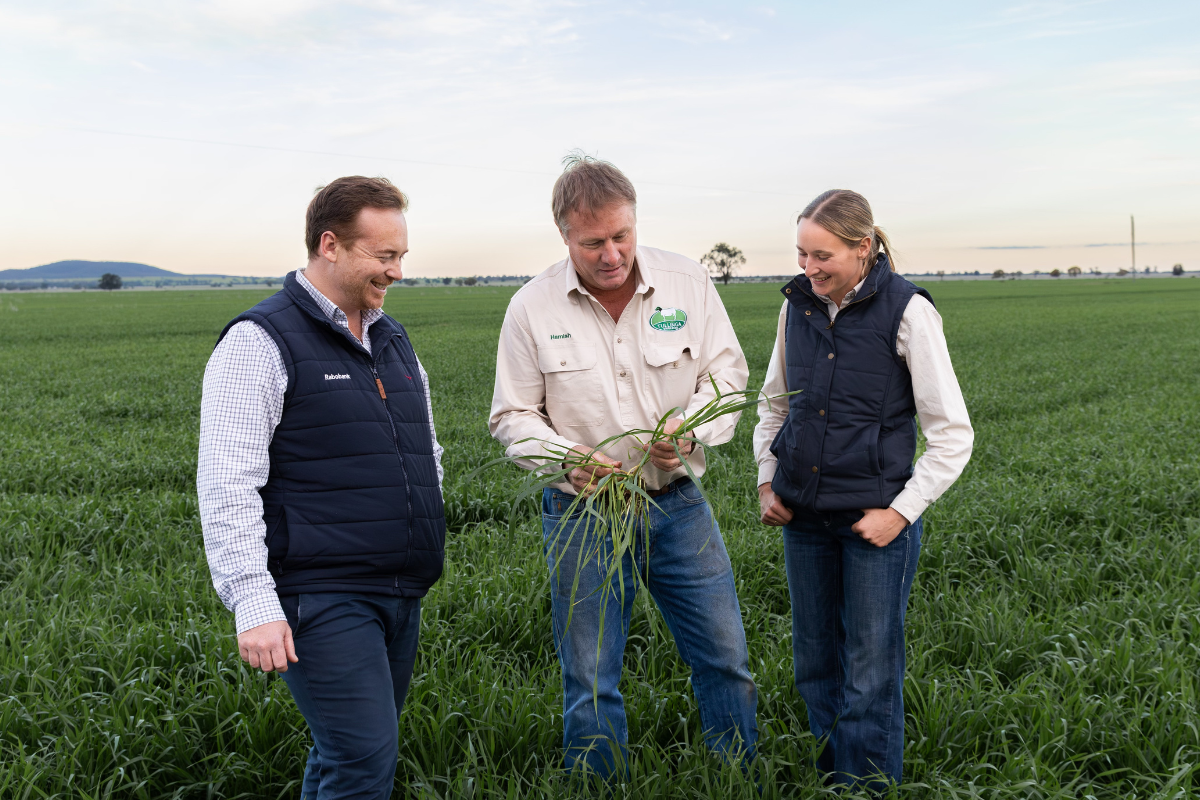
Alex Hunt in the paddock with Hamish and Alex Wald.
Embracing the next-gen into the business
Looking back on the business he and Penny have built, Hamish shakes his head in slight disbelief.
“Our main aim was to provide our children with an education, and here we are now with a business that’s providing not only income, but one that has attracted the kids home.”
“It was difficult making the decision to shift into Dorpers, and it was bittersweet selling that last mob of Merinos, but it was a decision that would continue to hang over us, and the hardest part was making it.”
Their purchase of Tullinga Dorper Stud, comprising 420 ewes, plus a commercial flock, includes their children Alex and Callum, and the Wald family is growing strategically to support succession.
Having attended a Rabobank Succession Workshop a number of years ago, Hamish admits he had a set idea of what succession would look like, and in hindsight it was “dinosaur” logic.
“I had a son and a daughter and thought they’d each get the same – yet thanks to the workshop I realised I was thinking about what I wanted for the business, not what they actually wanted, so it was a terrific opportunity to start the conversation early.”
Hamish and Penny reframed their greatest roadblock – which was not wanting to burden their children with debt – and realised that keeping them out of the business was potentially a greater risk.
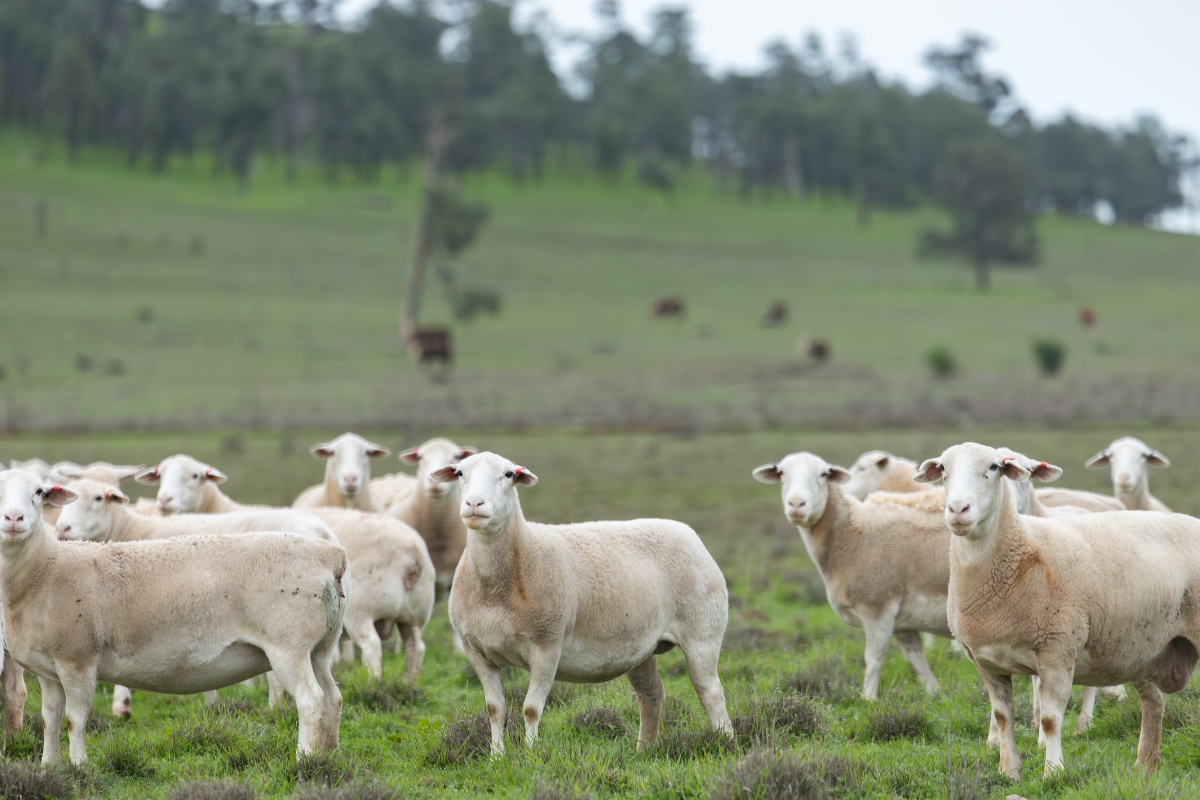
A transition into Dorpers has reenergised the Wald family, and added strength into the business.
Today Alex makes the marketing decisions and works with data to drive genomic and breeding improvement, as well as managing the cattle herd.
Callum, a DSSA inspector, runs the cropping operation and the commercial sheep.
Stud Master Barend Cronje is a DSSA inspector and highly regarded judge and manages the white dorper and dorper studs.
“Together they’re an incredible team making great decisions, and while at the end of the day Penny and I have the final say, we’re trying to help them lead with confidence.”
Having built a sheep business that is essentially transferrable, their challenge is now knowing whether the next-gen’s business will be at home, or elsewhere.
“Depending on relationships and where they settle down with a life partner, it may not necessarily be here at home, so in recent years we’ve sold land, and purchased other property so that our holding is now in three defined entities,” Penny explains.
“We sold farms we loved to make this work, yet it means that when our children do know where their future will be they can have a business here, or take it with them – they have the flexibility to continue their life in the direction they want without it impacting anyone else, or if they choose, they can go into business partnership with each other – they can make any decision they want knowing they’ll be fully supported.”
Watching daughter Alex so capable at home and in the saleyard, Penny said she was also particularly proud seeing her so comfortable within the industry.
“When I finished school agriculture was still fairly intimidating, and now it’s just not the case – over half the crowd at the Dubbo Dorper show are women, and I’d say of our clients, 50 percent are women as the principle decision-maker.”
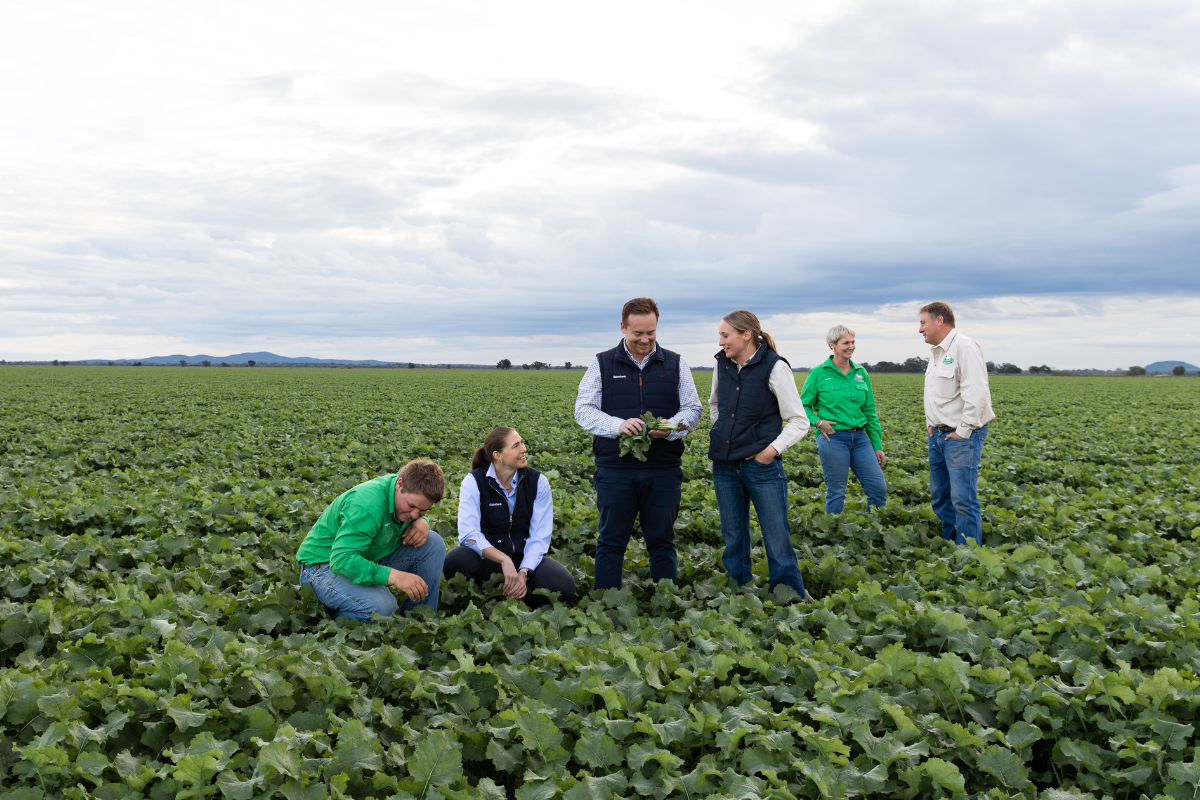
The Wald family is excited for a strong farming future.
At their annual on-farm sale, held each September, the family has even built a bathroom block to reflect this shift – of which, Penny laughs, the ladies are very grateful for.
To further support their children into the business, Hamish and Penny are highly engaged in Rabobank’s personal and business development programs, particularly its Financial Skills Workshops, which provides comprehensive farm specific financial literacy training.
Having no formal tertiary education himself, Hamish believes these opportunities are crucial for the next-gen to continue advancing in business.
“These are skills I never had access to, yet our kids are gaining these tools so much earlier, they’ll be so much better educated and capable of running these complex farm businesses.”
“I know first-hand that it can be hard coming from no education, yet thankfully there are courses like the Financial Skills Workshops, and industry mentors, which our children thankfully have, to fill these gaps.”
The Wald family will host its annual on-farm Tullinga Dorper Stud Ram sale at “Banar” on 9 September, 2026.