Posted by on
27/08/2026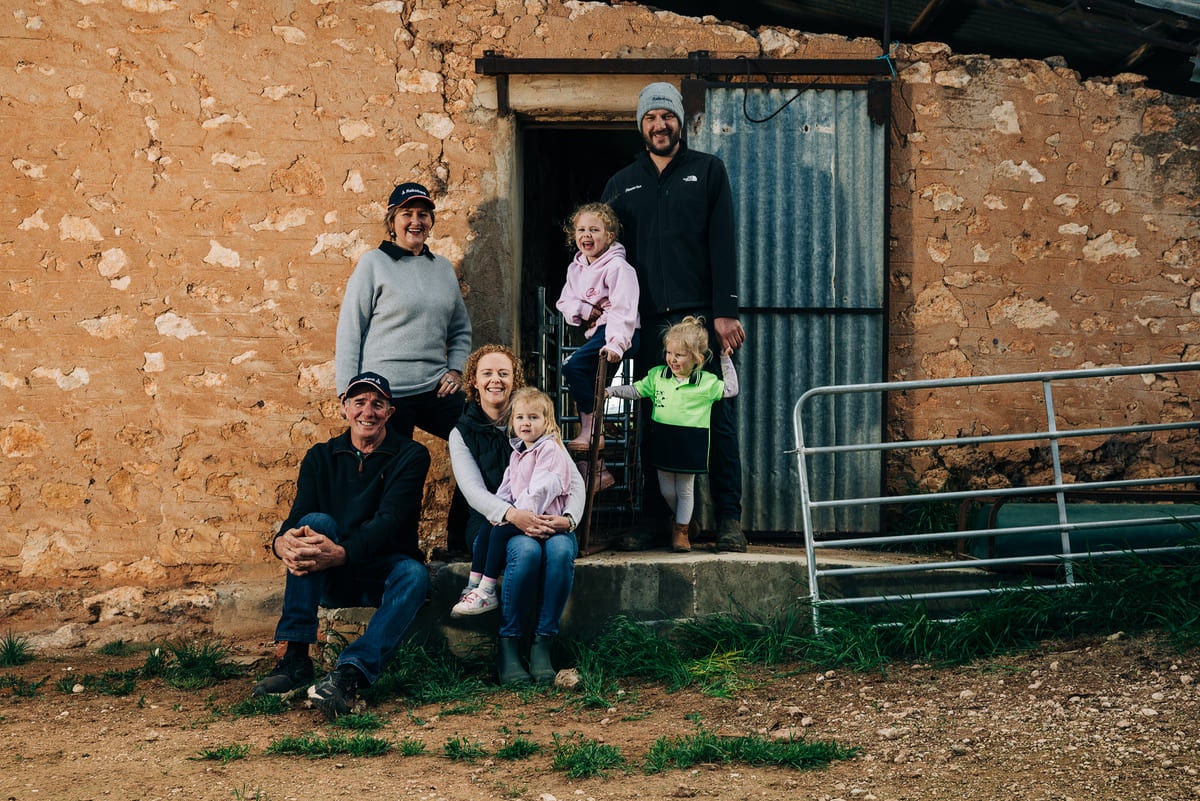
Blyth’s Zweck family, Gary, Ros, Brydie, Justin and the next gen, Maeve, Willow and Hazel.
During his youth, Justin Zweck didn’t envisage his future in dairy – he was a tractor man through and through.
Yet the looming potential of technology in reshaping the dairy industry was a proposition too exciting to ignore, and today Justin is harnessing the power of innovation for efficiency, welfare, and lifestyle.
Returning home to the Blyth dairy 15 years ago, this third generation dairy man works alongside his parents, Gary and Ros, and five years ago the family started investing significantly to replace the ‘old and tired’ herringbone dairy.
“We made a five year plan to establish a compost barn and robotic dairy, and the benefits from the barn were so significant that after three years we had both projects fully complete.”
Thinking differently for business success
Operating in a low-rainfall, non-traditional dairy region more synonymous with cropping, the integrated compost barn helps minimise feed wastage and keeps the family’s 300 Holsteins shaded in summer.
The stability of milk production now achieved during peak heat periods of summer has exceeded expectations, and fertility rates have improved off the back of more comfortable, calm and contented cattle.
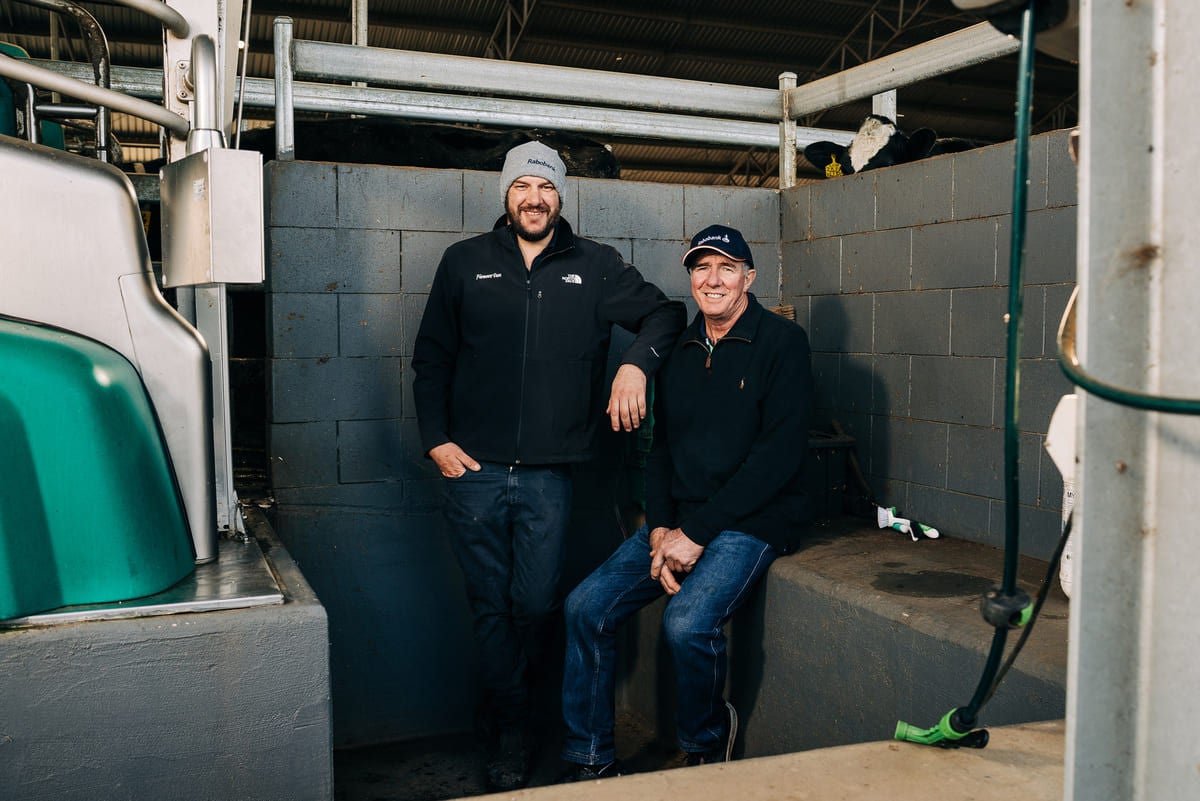
Justin and Gary Zweck; Technology drives efficiency across the Zweck family’s operation.
“We knew we lost productivity during heat waves, but probably didn’t realise to such a great extent – now we have the systems in place to really measure our data,” Justin explains.
The Zweck family has invested in GEA integrated Automatic Calf Feeding, Robotic Feed Pushing and GEA Robotic Milking, and now uses the CowScout collar system for heat detection and health monitoring.
“We can now identify cows and track their milk production and quality, identify the optimal insemination times, and track non-cycling cows and those potentially still cycling.”
The collars also monitor cow health, and alert the Zwecks to signs of illness for swift intervention.
Beyond welfare and profitability perks, the lifestyle benefits of the new system have been plentiful – and with Justin and partner Brydie having three daughters under six, Willow and twins Hazel and Maeve, the technology affords for precious family time.
“I wasn’t interested in getting up at 3am and walking in the door at 7.30pm, and this technology has changed our whole operation – it means we can be a bit slower out of bed, and we’re not bound by the clock like we once were.”
Running a mixed farming operation that also includes cropping, Justin can now run the dairy from the tractor cab, and make decisions from his phone.
Last month he oversaw the dairy whilst holidaying in Japan – once unheard of in the industry.
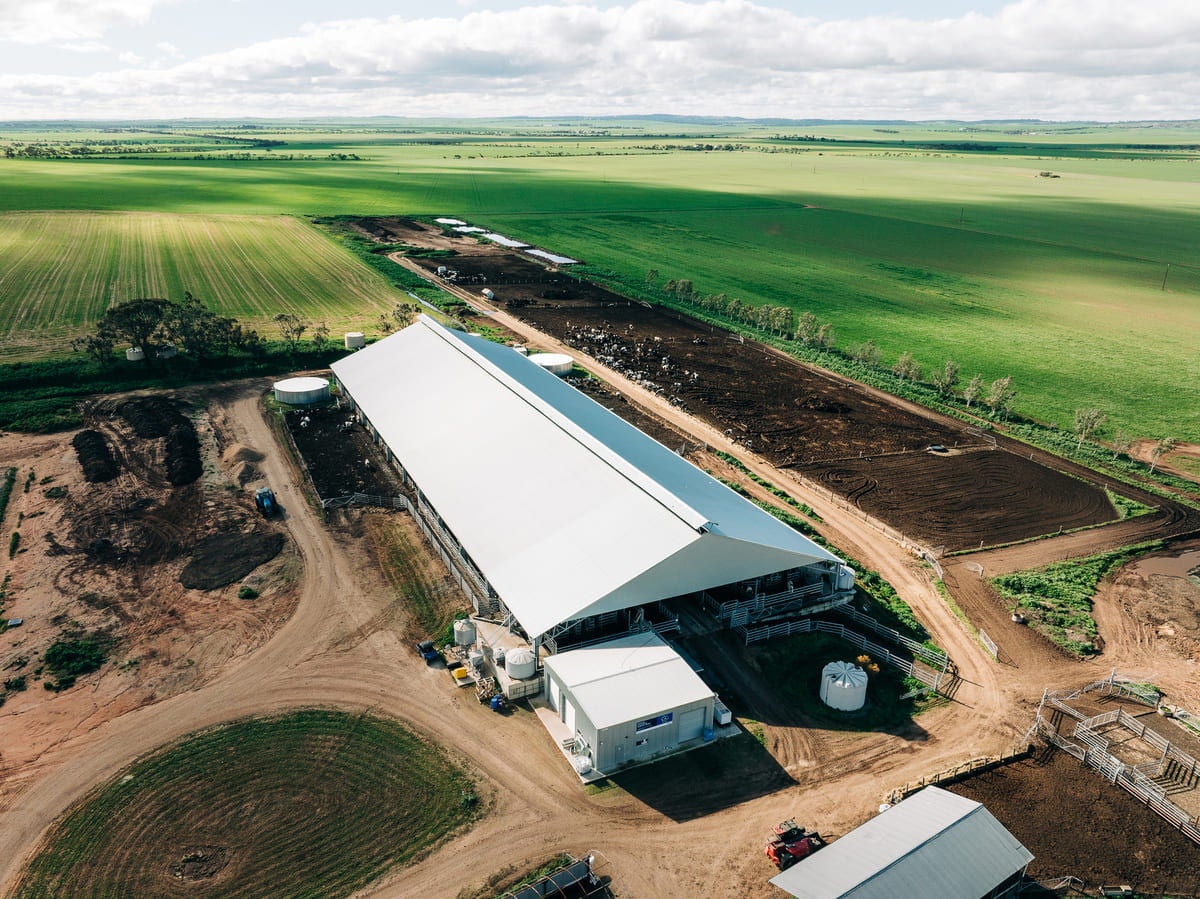
The new infrastructure has boosted welfare and productivity outcomes.
Local dairy to be proud of
The vibrancy within the business is in stark contrast to when Justin returned to the family farm, describing the operation as ‘in a pickle’.
“We’d endured a bad run of milk prices and poor seasons, yet we took a punt and negotiated a contract with Woolworths to supply its Farmers’ Own milk label, which gave us milk price security,” Justin explains.
“It was a decision that paid off, we were able to grow with confidence and shift the business into a better financial position.”
Today the Zwecks supply their milk to La Casa Del for cheese, contributing three million litres per year to the South Australian owned company.
“It feels like a well-aligned move, it’s a local, family-owned company and we can see exactly where our product is going to, and the domestic market is not as volatile as the export market – although it does have its place.”
Rabobank support underpins growth
The Zwecks’ development is the first integrated robotic dairy compost barn in South Australia, and the first for GEA in Australia, yet it wasn’t a decision made lightly.
Justin travelled Australia extensively researching a variety of sheds and systems, and had direct input customising the internals of the shed.
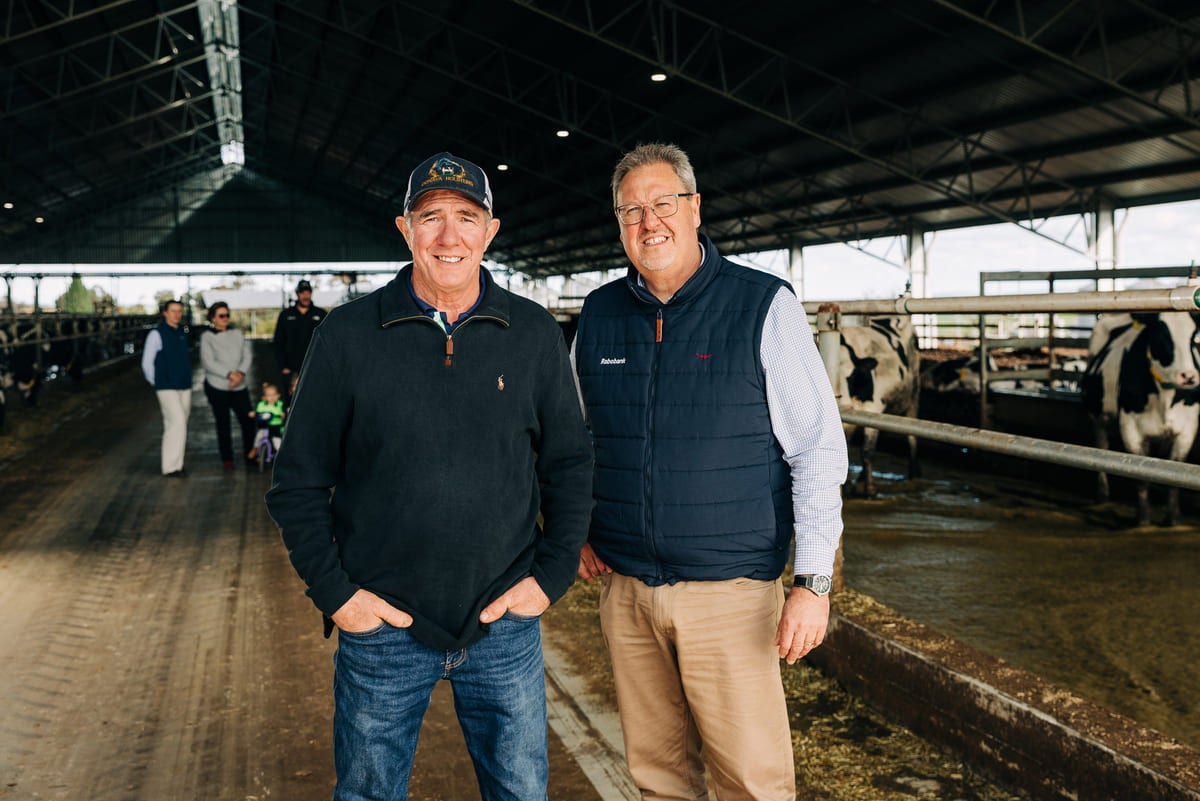
Gary Zweck, with Rabobank’s Gary Renshaw.
Rabobank was also key in the success of the project, and Justin says that the family is grateful that their enthusiasm was shared by their rural manager, Gary Renshaw out of the Clare team.
“We presented all our facts and figures to Gary, and at no point did the bank hesitate, in fact Rabobank was extremely happy to support us, and excited by our opportunity.”
“We know Rabobank supports a lot of dairy farmers in Australia, and globally – they understand the industry and continue to back us so we can take the industry forward.”
An industry continually evolving
Buoyed by the success of his business progression, Justin admits he ‘has big dreams’, and while he smiles that they’re dreams rather than plans, he’d like to double the size of the barn, and adopt 100 per cent robotic feeding.
“I don’t want to get bigger and have to milk more cows, I want to get better and produce milk more efficiently, and robots and data will help us make decisions more easily.”
Drawn to dairy by its technology, he admits that now, two years into their development, it’s still ‘information overload’, and every week he discovers something he can tweak.
“I’m not sure my children will ever understand what it’s like to milk a cow on a frosty morning, but it’s progress we’re embracing, and excited to see where it leads.”
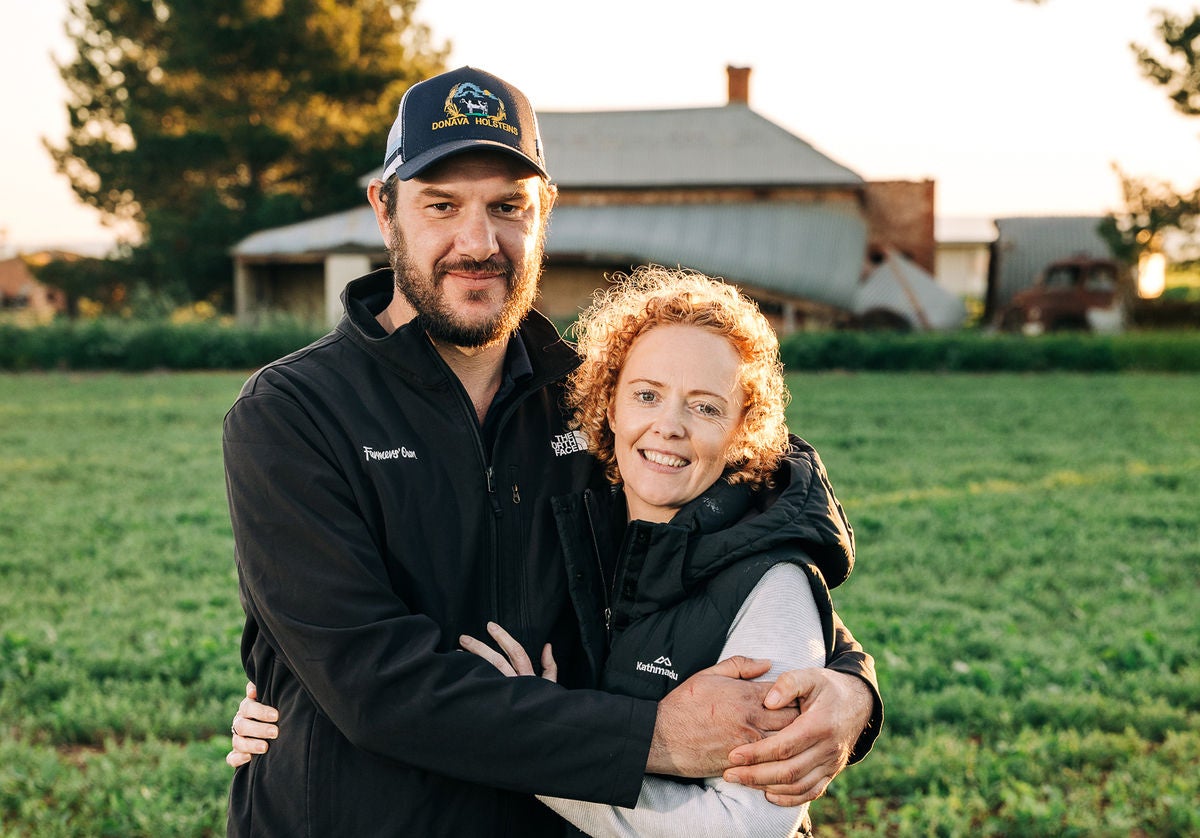
Justin and Brydie look to a dairy future with optimism.