
Posted by on
30/01/2026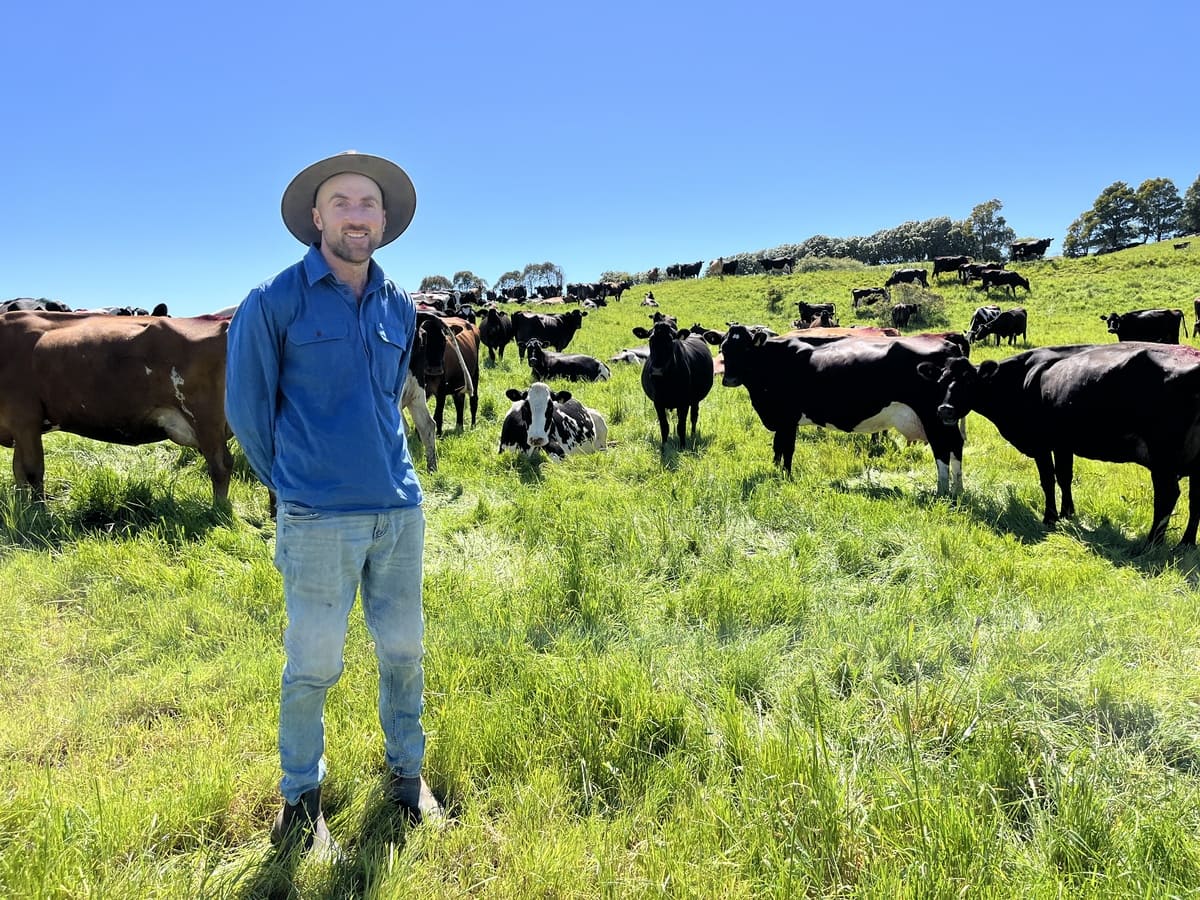
Mark Griffin exemplifies the modern, next-gen dairy producer driving the industry forward.
Tasmania’s Mark Griffin is forging a new narrative for the Australian dairy industry, and it’s a story of optimism, prosperity and quality dairy products that consumers can be proud of.
There’s not a decision made on the family’s Moltema property, or across its 975-strong herd, that isn’t highly considered, and there’s an inspiring thoughtfulness to this 33-year-old that underpins the operation’s award-winning success.
Spearheading a modern dairy operation
Well recognised for its milk quality – the Griffins’ dairy, Mount Patrick Estate – has been named in the top 100 dairy farms in eight of the past 10 years for milk quality, and has received the Milk Quality Award in the Cadbury Farmer of the Year Awards in 2023.
It’s national recognition that reflects years of refining practices, management, and genetics for a first-class operation.
“We continually asked ourselves, how can we go to the next level, reduce mastitis cases, and drive business profitability? How can we do the best job we possibly can inside the dairy?”
Mark, a Marcus Oldham alumni, credits herd testing as a significant contributor to their business success.
“We herd test once a month, collecting data on individual cows so each cow has ten data points over the course of a calendar year – it has had a huge impact on identifying problem cows within the herd.”
“The way we see it is, our cows are measured on performance monthly – it’s their performance review – and I liken it to an elite football team,” Mark smiles. “You might have 25 per cent of new recruits join the team, and 25 per cent of the team delisted for the optimal team, and that’s how I view our herd.”
“We need the right cows in the team, we’re not changing our farming systems to suit our cows, we’re breeding a cow that’s going to suit our business.”
“The KPIs we test for allow us to benchmark internally, and amongst our peers, and affords us valuable data on each cow’s milk production – from long term milk yield per cow, to milk fat yield, protein yield, and somatic cell count – this helps genetic selection pressure within the herd.”
“Our cows are our greatest asset, 92 per cent of our income is comprised from our milk, hence the reason we performance record all our cows – it’s critical we make the correct decisions when retaining or exiting cows from the herd, and when this is compounded year-on-year it makes a great impact.”
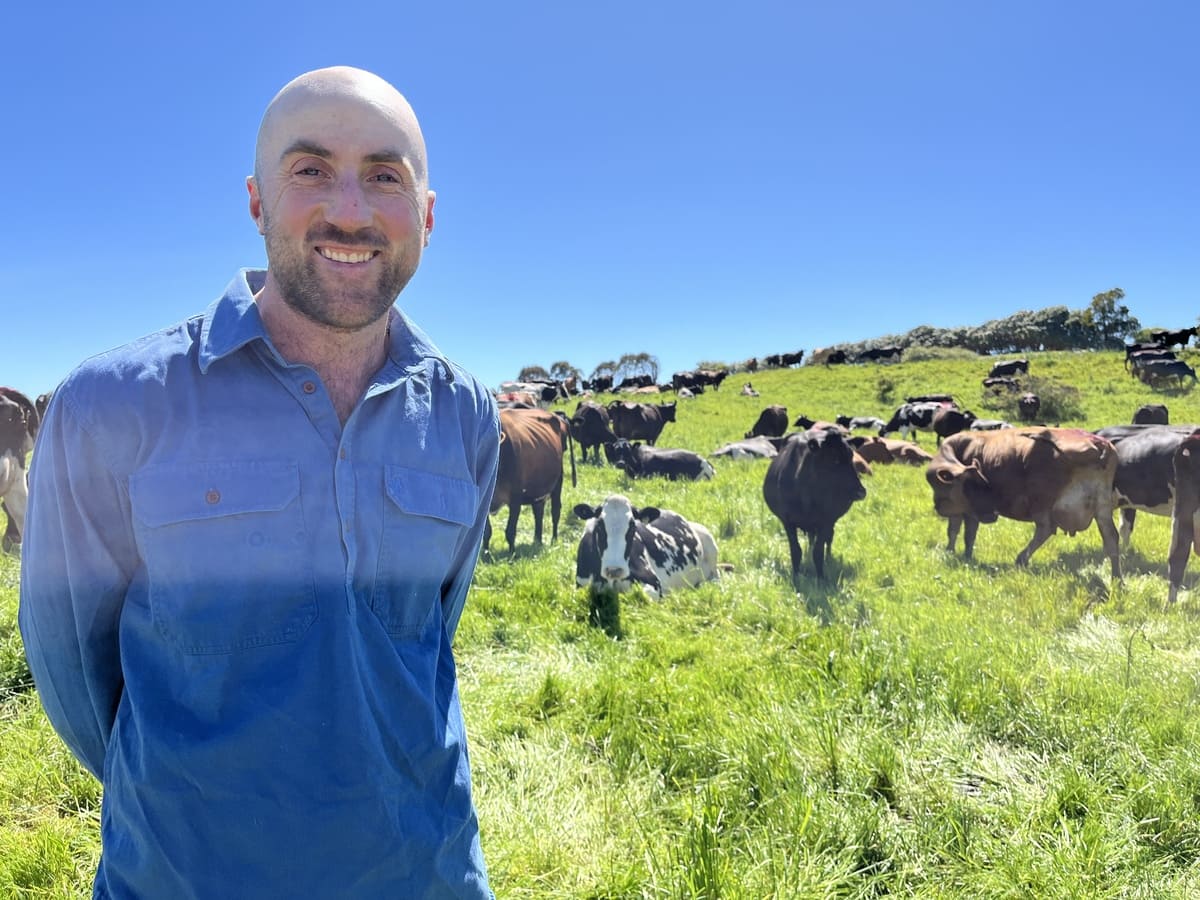
Mark is excited for the future of dairy.
The Griffins’ operation, which also includes Mark’s father Peter, uncles, Gavan, and until recently, Michael, now semi-retired, runs a cross-bred herd comprising Friesian, Jersey and a small amount of Norwegian Reds.
“Our herd is based on New Zealand Friesian and Jersey genetics, we found the animals New Zealand breeds are the most relatable to our needs – their cows are so efficient in a pasture-based system, and for the past 25 years we’ve been capturing and replicating what they’ve achieved on grass here in our own region.”
The Griffins’ favour a cow moderate in stature, with chest width, udder health and longevity for walking – particularly considering the topography of their undulating property.
Progressing an industry, now and then
With the first generation of Griffins settling on their current site in 1837, the farm has evolved and adapted to today emerge as one of Australia’s most progressive.
“My father Peter, and uncles Michael and Gavan were in a partnership for 50 years and they built the business from a moderately sized mixed sheep and dairy enterprise to a 971 hectare portfolio producing five and a half million litres of milk annually.”
Mark works closely with his father and uncles, and is grateful for their expertise and guidance.
“You just can’t replicate their 50 years of experience in the Tasmanian dairy industry – their knowledge and wisdom is highly regarded, and certainly greatly valued in the Mount Patrick Estate business model.”
Glass always half full at Mount Patrick Estate
Further demonstrating the family’s highly considered quest for growth and opportunity, six years ago the Griffins approached Cadbury to supply milk for its beloved chocolate offering.
“We’re so proud to put our name to the milk that supplies Cadbury, which is such an elite, highly reputable and well-loved brand.”
Whilst Cadbury’s payment model was financially appealing, the ethics and culture of Cadbury were equally important.
“Cadbury has been named Roy Morgan’s ‘Most Trusted Food and Beverage Brand’ for multiple, consecutive years, with a focus on family farming that aligns with ours.
“It’s a fruitful partnership, with further growth opportunity, I believe, particularly when it comes to the social license to farm.”
Providing industry quality milk with a focus on cattle health and welfare is the source of great pride amongst the whole team.
“Primarily, we are milk harvesters, and there’s a level of pride, but also accountability, that comes with supplying a brand such as Cadbury.”
“Each year is like climbing a mountain – how can we get better, and find ways to improve our systems so that we can go higher and higher – it’s continuing to get those one-percenters right.”
“My passion within a passion is the commodity that goes out to the consumer, and we’ll continue to work hard to ensure households across Australia have access to the healthiest milk and dairy products, produced by low stress, content, cows.”
Building an industry to be proud of
Together with wife Emma, and baby daughter, Billie, Mark is genuinely excited for the future of the dairy industry, although acknowledges the challenges farm businesses face.
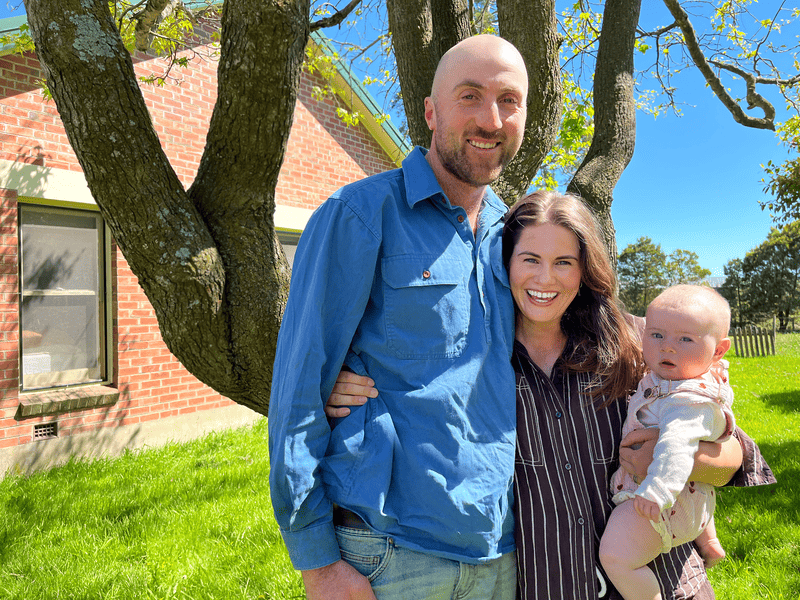
Mark is building a strong dairy future with wife Emma and baby daughter, Billie.
“I’m really positive in my perception of the career I have in front of me, and I ask myself often – ‘in thirty years, when I’m 63, what would I want my legacy to be, and not just from an industry point of view, but by my wife and my child’ – and that’s what really drives my ambition.”
“Everyone has a choice to make when they get out of bed each day, we don’t just have to do the same job, and follow the same career, as expected – working in ag should not be a life sentence, and my main ambition for this business is of course ensuring its profitability and making the numbers work, but also that we’re facilitating a positive lifestyle balance for a sustainable work place.”
“We have to be the example, and remove the barriers that may potentially stop the next generation from entering the industry.”
Mark describes the work culture at Mount Patrick Estate as supportive, and one in which staff feel ‘safe to fail’.
“We want our team to feel secure enough to challenge themselves to grow, strengthen their skills and ultimately support decision-making – this ultimately maintains job satisfaction, and retention in the work place.”
The business actively invests in upskilling opportunities for staff, and Mark concedes that even if that team member moves on to another dairy, ultimately it’s a contribution still relevant for the greater good of the whole industry.
It’s this focus on the wider community and industry that has underpinned Marks emergence as an industry leader – he’s a Director on the Board of TasHerd Pty Ltd, was previously a member of the Young Dairy Network and a previous member of the Tasmanian Dairy Focus Farm Steering Committee.
Mark is also chairman of the Cadbury Milk Supplier Committee, representing 48 dairy farmer voices who supply the brand.
“In agriculture we need to strike the balance between work and lifestyle to attract and retain people in the industry, and while there are so many positives of working in dairy, I’m acutely aware that as leaders we have to walk the talk.”
Rabobank helping underpin a strong farm business
From RaboResearch reports and dairy events with dairy analyst Mick Harvey, Mark always makes time to engage in these opportunities, and recognises the importance of staying up-to-date.
“It’s so important that we know what’s going on globally and locally, and what levers are being pulled that will determine the price we receive at the farm gate.”
The opportunity the bank provides to network – from a local, State, and global perspective – is also highly regarded by the Griffins.
“We strongly value the relationship we enjoy with Rabobank, and we think our manager, Helene Gunn’s greatest point of difference is how personable she is, and the understanding she has around the levers that drive our business.”
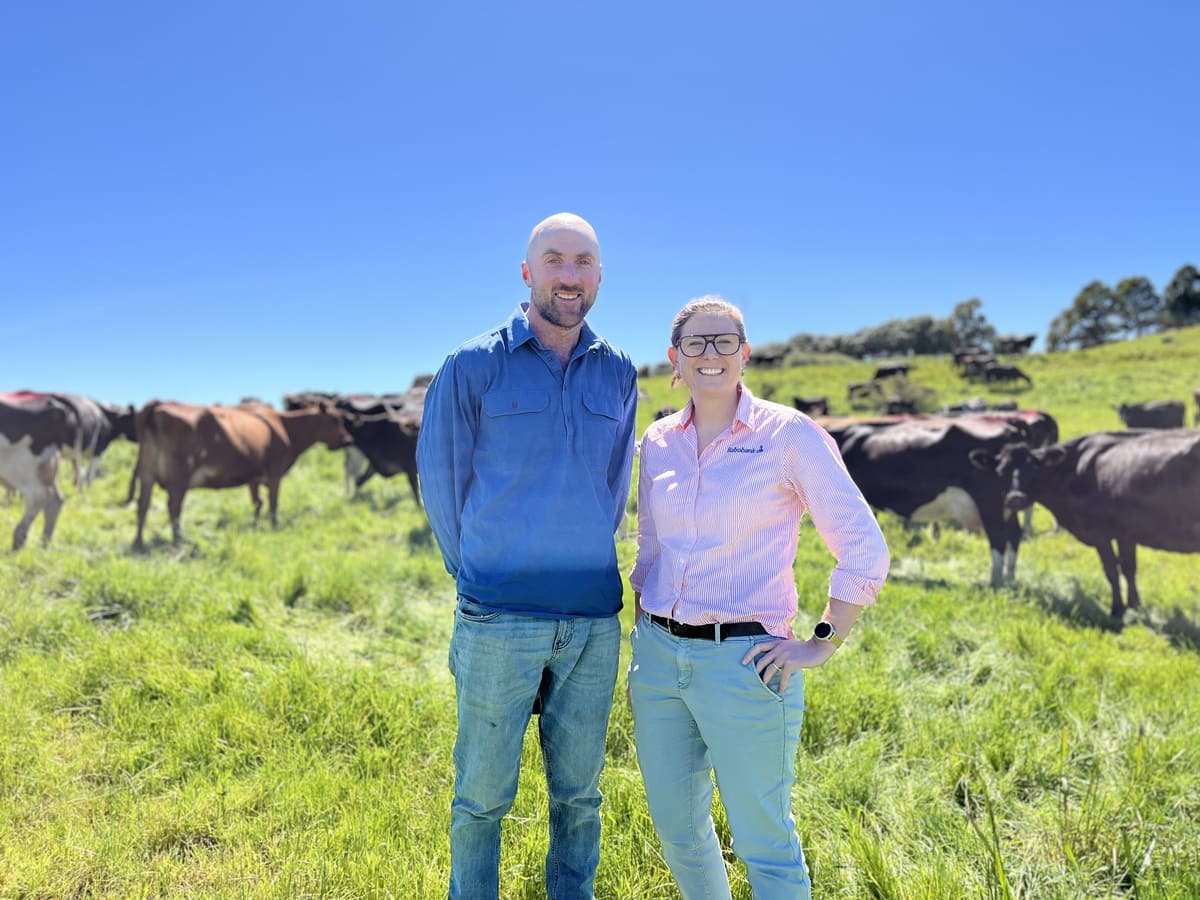
Mark with his Rabobank manager, Helene Gunn.
“She knows our business, and her ability to understand our past, present, and future – what our aspirations may be and how we can achieve them – is a true asset, and a point of difference we value at Rabobank.”
“Helene’s capacity to help us capture opportunity as it arises is a great strength – whether that’s land acquisition, new trading entities, debt-to-ratio entities, or loan arrangement and timings.”
Alternatively, as a bank dedicated to agriculture, Rabobank’s understanding of seasonal cycles is another drawcard.
“Rabobank has an ability, and willingness, to finance a business through a potential volatile climate, and into a position of strength.”
Connecting and strengthening at the Australian Dairy Conference
A vocal advocate of industry collaboration and connection, Mark believes the greatest benefit of the Australian Dairy Conference is the gathering of like-minded farmers who are aspirational, and inspirational.
“You can’t help but walk away from the conference, and its associated farm tours, with a renewed pride in the industry – as well as newfound knowledge and growth.”
The Australian Dairy Conference will be held at the Melbourne Convention and Exhibition Centre on February 11 to 13, with a program focused on leadership, balancing profitability and productivity, redefining sustainability, and safeguarding farmer health as the industry navigates new and unpredictable challenges.