
Posted by on
04/05/2026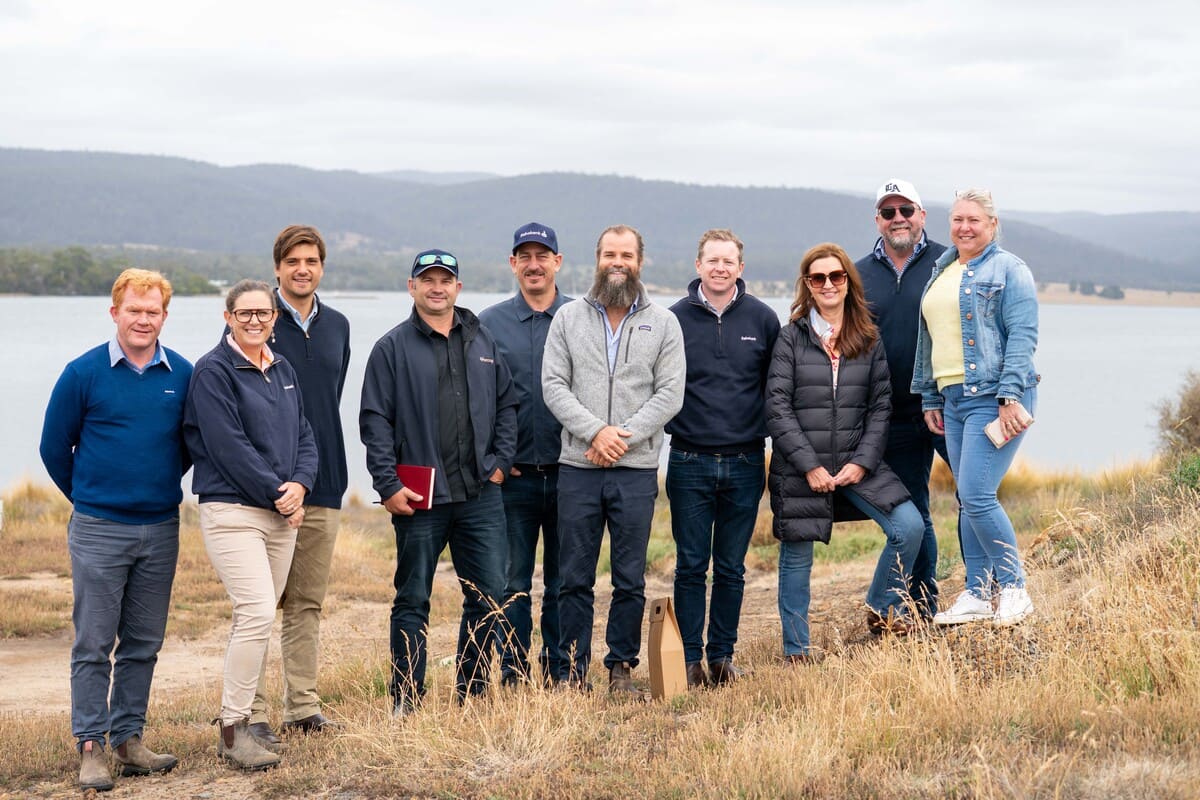
The recent Rabobank Horticultural Knowledge Tour, including Jamie and Melita Jurgens, far right.
They’re fifth generation farmers in Queensland’s verdant Bowen region, armed with horticulture degrees, over 25 years of vegetable growing expertise, and extensive industry experience.
Yet despite impressive know-how, Jamie and Melita Jurgens continue to embrace the opportunity to learn.
As such, the couple didn’t hesitate joining Rabobank’s recent Tasmania Horticulture Knowledge Tour.
“We’d never been to Tasmania,” Jamie explains. “It’s such a renowned horticultural region and has been on our list for a long time, so this tour was the perfect opportunity to visit, and we were able to take a genuine look behind the scenes and explore the nuts and bolts of some really impressive operations.”
Without any specific expectations surrounding the tour, Melita smiles that it’s always inspiring to see how other farmers farm.
“We seem to have been particularly busy in our business over the past few years, and haven’t had a chance to do much travelling or personal development, however it’s something we flagged – we do need to continue upskilling and know what’s happening outside our patch, and how that may be useful for our own business,” she says.
The Jurgens’ vertically integrated farming business, VJK Produce, includes 1,200 hectares of certified organic and conventional green beans, sweetcorn, mini melons, baby capsicum, and pumpkin.
Progressive and visionary, the Jurgens take a highly-considered approach to business, and the land, with their focus on producing the freshest, tastiest, nutrient-rich produce possible, with the least impact on the environment.
They’re values shared by a number of producers visited during the tour, from Sea Forest - which is cultivating Asparagopsis to produce methane abating livestock supplements, to Riverlea Farming’s core focus on sustainable, high-efficiency livestock and seed production systems.
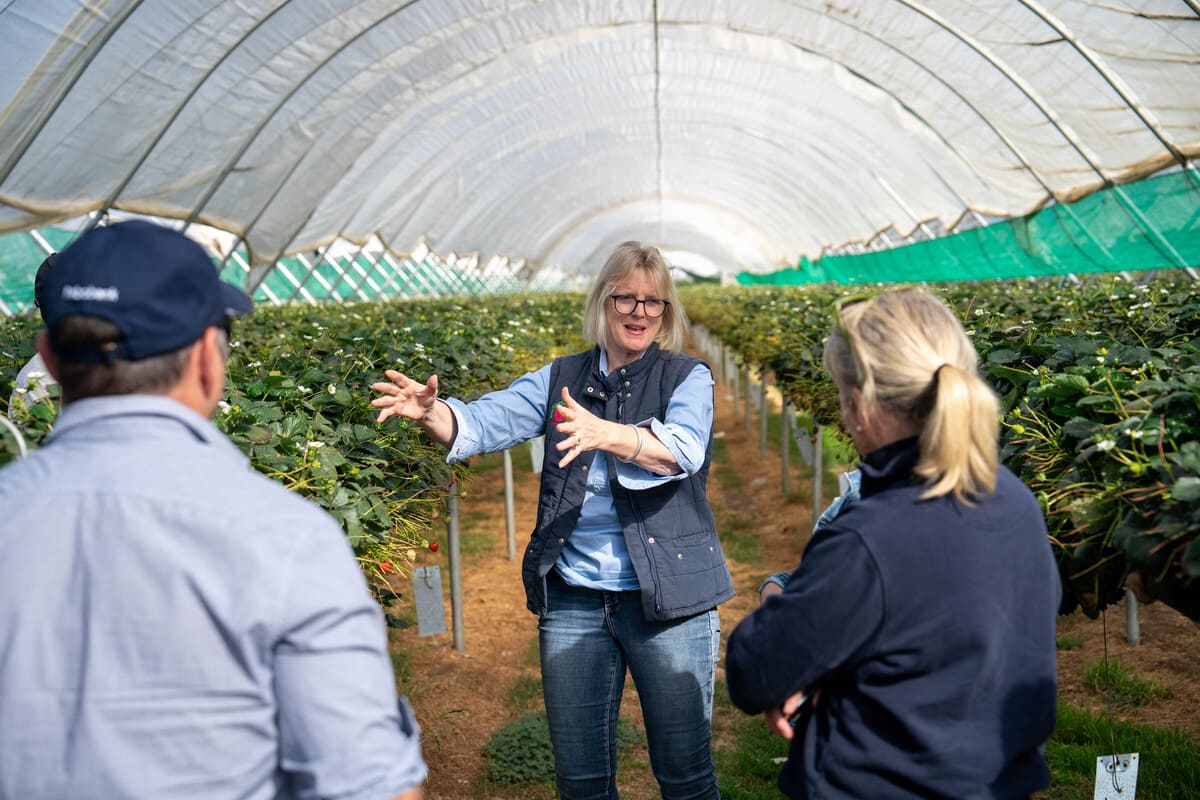
Hearing from Kate Sutherland during a tour of Burlington Berries.
Melita praised the dexterity of businesses visited during the six-day tour, which featured a variety of cropping systems, business models, and commodities – from grapes, to seaweed, to apples.
And they found inspiration in some of the most unlikely corners of Tasmania.
“Hansen Orchards in the Huon Valley run a cool climate apple and cherry orchard, and while it’s a very different enterprise to ours, you just never know where synergies lie – which is the beauty of a tour like this.”
“It was really exciting to see the system they use that protects cherries from summer rain – it’s a state-of-the-art covering from Germany and we’ve been looking for something like this for a while to protect our own crops.”
“We’ve already lined up another visit to Tasmania to further investigate this solution, and gaining knowledge from a cherry producer was certainly one of the most surprising take-aways from the tour.”
“Before the zip system you had to put a bird cover over the rain cover, which blocked sunlight and affected yield, so we’re pretty excited by this innovation,” Jamie says.
With the 2026 hort tour consisting of a smaller cohort, Melita believes the intimacy of the tour made for robust discussion.
“The smaller group really gave us the opportunity to drill down at the businesses visited for genuine one-on-one discussions – it was easier to deep dive, and everyone had a chance to ask questions.”
“From our fellow tour participants to the farmers who hosted us, everyone was so open and honest about their businesses, and challenges, and often, solutions.”
Jamie reflects that at every stop on the tour there was something to learn.
“Even when you don’t think you learn anything, it may be two years down the track and you’ll hit a challenge, and think ‘hang on’, this is how they solved this problem – you just never know when your learnings might come into play.”
A problem shared is a problem halved
Labour is one of the Jurgens’ greatest business pain points, and as they discovered on the tour, it’s a challenge shared across the industry.
“Everyone is trying to automate or source local labour and rely on a short-term workforce only when necessary,” Jamie says.
VeeJays Kalfresh, which also enjoys a joint venture partnership with Kalfresh Pty Ltd, began customising its systems five years ago to mitigate the risk of being caught short during peak production periods.
“Covid actually fast-tracked our automation, and we grew rapidly in this space during those years, which provided a great foundation for us to continue expanding our automation capacity.”
Robotic packers are now installed for corn and beans, and the Jurgens are currently trialling autonomous paddock equipment.
“Considering the improved consistency in quality and output, replacing physical labour costs with capital costs has been a worthwhile return on investment.”
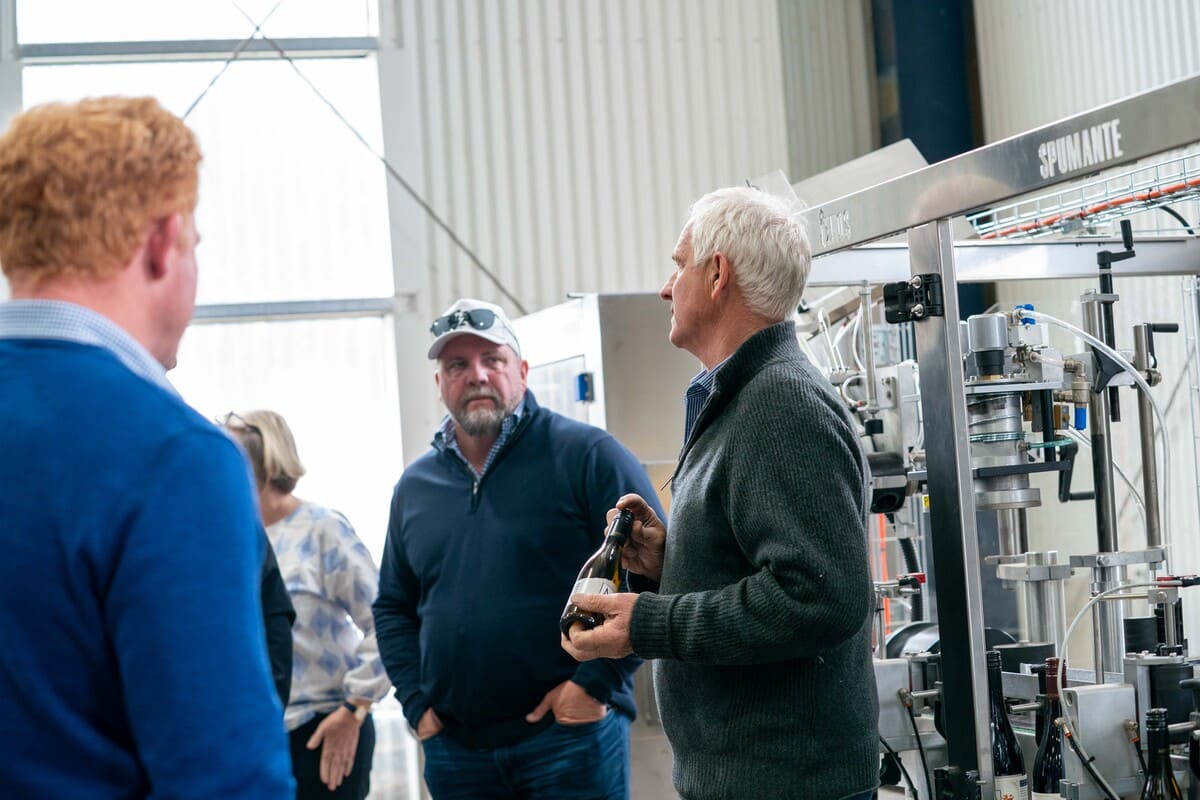
Jamie learning more about wine production from Micheal Dunbabin at Milton Vineyard, Cranbrook.
With Jamie and Melita both valuing self-development and learning opportunities, they have remained well engaged in Rabobank’s suite of opportunities over the years.
They completed the Executive Development Program (EDP) when it was in its infancy in 2003/4, and Jamie acknowledges the renewed energy and direction it afforded their business.
“Our business changed a lot off the back of the EDP, we gained confidence in negotiating and setting a business structure, and practical, comprehensive ideas such as personality profiling staff – which really helped build and manage a strong team.”
“I’ve done a few of these sort of programs over the years, as well as having a university degree, yet the EDP still remains one of the most honest, practical, and credible opportunities I’ve had.”
Such is their appreciation, the family will soon host an EDP Alumni tour on their farm.
“We really enjoy sharing our story, and our farm – it’s about giving back,” Melita explains. “So many people have given us their time, and helped us to learn and grow, so it’s only fair to pass that knowledge on.”
With both their children – Jess, 27 and Jacob, 25 – now also involved in the farm business, Jess has recently completed the EDP, with her partner Rowan also completing the Farm Managers Program (FMP).
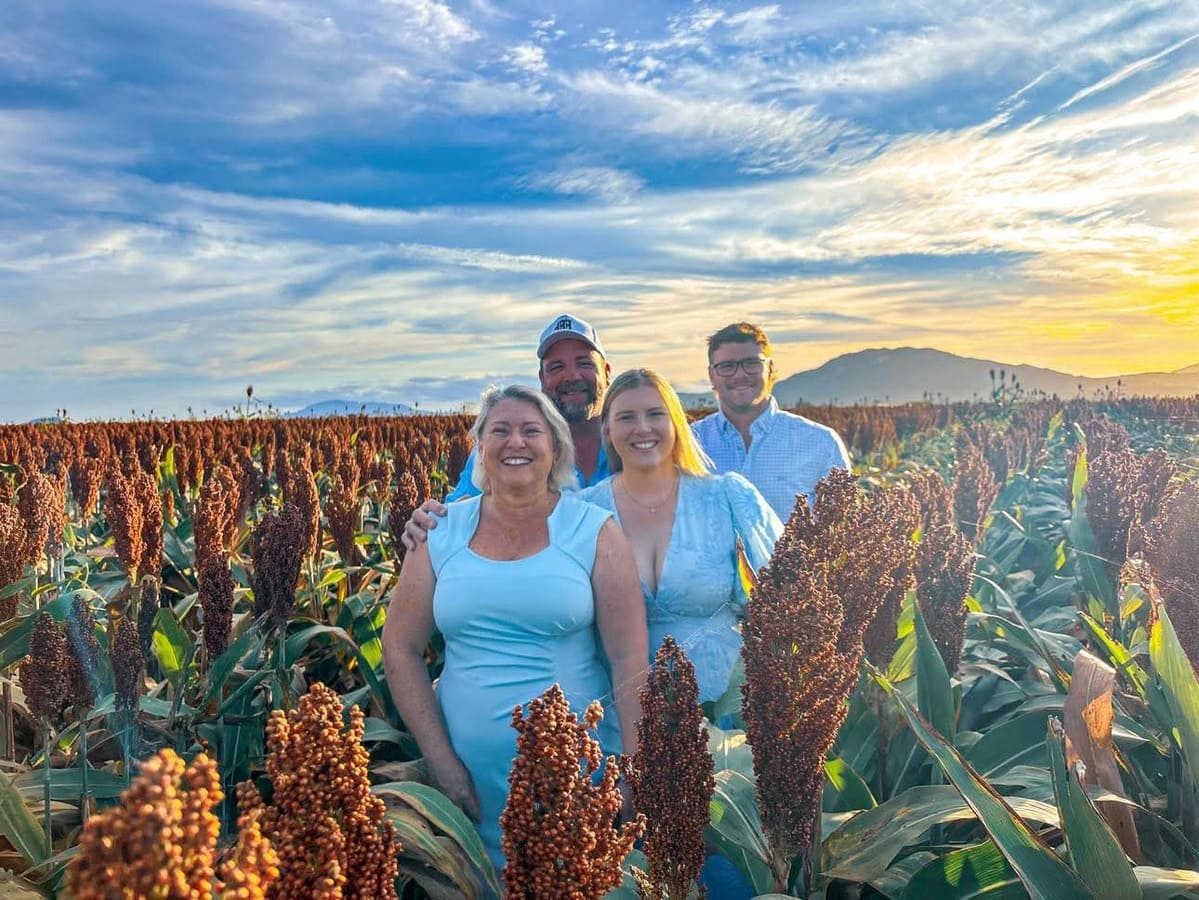
The Jurgens family, Melita, Jamie, Jess, and Jacob.
“Jess is in the business boots and all, and she’s the right age for the EDP – it’s a great opportunity for her to work on the skills she needs to contribute to, and no doubt take the business forward, and Jacob is not far behind.”
“Jacob is scheduled in our plan to do the EDP in two years’ time, and in the meantime is fast becoming very fluent across the entire business.”
As leaders in the supply of certified organic and conventional produce across Australia, and with the next-gen equally engaged in continual learning, Jamie and Melita agree that it’s an exciting time for the business, and family.